In March, 2009, I started taking Low Dose Naltrexone, or LDN to treat my Hepatitis C. It was initially prescribed to me by Dr. Burt Berkson at his clinic in Las Cruces, New Mexico, in 3 mg. capsules. Since that time, my own doctor writes my LDN refill prescriptions.
Within months, it brought down my viral load and normalized my liver enzymes. And on my most recent lab work (5/2010), my viral load is even lower.
Viral load at 11,300! In December, it was 34,524. September: 18,729. Pre-LDN Jan. 09 - 1,280,000
ALT: 25 December: 34 Sept. 36 Pre-LDN Jan. 09 - 174 (range: 6-40)
AST: 30 December: 31 Sept. 37 Pre-LDN Jan. 09 - 99 (range: 10-35)
My doctor uses Quest lab:
HCV RNA, PCR test result of 11,300 with a log of 4.05. It was the COBAS (R) Ampliprep/COBAS, TagMan (R) RNA Test Kit (Roche)
Will update complete labs soon! Vitamin D at 95 from 53 after taking 5,000-10,000 of NOW Vitamin D3.
Showing posts with label ldn. Show all posts
Showing posts with label ldn. Show all posts
Friday, May 7, 2010


Tuesday, January 5, 2010
Low Dose Naltrexone January 2010 Lab Results for Hepatitis C
I started Low Dose Naltrexone (LDN) last March for Hepatitis C. I also test positive for Sjogren's Syndrome and Rheumatoid Arthritis (RA). These are my latest lab results.
I was a bit apprehensive as I didn't feel too well on the morning of my labwork - I had that "virusey" feeling and was also a bit stressed as they couldn't find the tests that they needed to run in the Quest Lab computer - so I sat for 45 minutes fuming. I had been feeling great except for that day (of course).
My HCV viral load crept up a bit from 18,729 in September to 34,524 - not too bad considering how I felt that day. Last January, pre-LDN, it was 1,280,000 and had dropped to 49,400 in June after being on LDN for 3 months. So I'm staying pretty stable - better than skyrocketing back up but not going down as I had hoped. For awhile, I was taking the 3 mg. LDN every other night, but for the last month or so, I went back to every night dosing. I will discuss with my doctor about possibly increasing the LDN dosage.
My ALT/AST were back to normal range though they weren't that high last time. In January last year, my ALT was 174, in May it dropped to 23, in Sept. it was 36 (range 6-40) and now is 34. My AST was 99 in January, 30 in May, 37 in Sept.(range 10-35) and 31 now.
Albumin (range 3.6 - 5.1) 4.8 - was 4.9 - it was 5.2 last January
Globulin (range 2.2 - 3.9) 2.9 from 3.0 - it was 3.7 last January
Bilirubin total (range 0.2 - 1.2) 0.7 from 1.1
Alkaline Phosphatase (range 33-130) 66 from 57
Total Protein - (range 6.2 - 8.3) 7.7 from 7.9 - it was 8.9 last January
Alpha Fetoprotein - 5.0 same as last time - was 6.1 which was high earlier last year.
My ferritin dropped from 80 to 38 which might be pushing it a bit - I'd been religiously taking the IP-6 along with a product called Chelaco (which my doc sells). My total iron is 136 (range 40-160) down from 165 and iron binding capacity is 373 from 352 (range 250-450)
Sjogren's level - 3.3 from 3.5 - it was 4.5 in January, pre-LDN
RA - 21 from 24 - it was 31 in January - pre-LDN
Vitamin D (range 20-100) - 59 from 49 but had been 62
Most of my other blood counts are the same - I need to talk to my doc before I try and interpret them - nothing really out of range but some of the ones that we were trying to change, via the methyl B vitamins are the same as they were in 2007. (MCV, MCH) red blood cell count, etc. I might talk to her about being tested for IF - Intrinsic Factor which can inhibit your body from absorbing B-12.
My red blood cell counts have always been on the low end - which was another argument on my part whenever a doc would try and push HCV treatment on me - ("how long before I'd be on Procrit? I'd ask them)
Slight decrease in platelets (range 140-400) 163 from 172 (186 last January)
Slight drop in red blood cell count (range 3.80-5.10) 3.84 from 3.95 (4.21 last January but 3.78 prior to that)
White blood cell count (range 3.8-10.8) 6.1 from 4.6 (6.0 from last Jan.)
Neutrophils - (range 1500-7800) 4111 from 2585 (3750 last jan.)
Eosinophils (range 15-500) 140 from 120 (102 last jan.)
Basophils (range 0-200) 24 from 14 (12 last Jan)
The LDN isn't really affecting my lymphocytes overall - some are better, some are worse.
CD3 (Mature T cells) (range - 57-85) 80 from 77
Absolute CD3+ Cells (range 840-3060) 1122 from 1008
%CD4 (Helper Cells) (range 30-61) 58 from 52
Absolute CD4+ cells (range 490-1740) 817 from 720
%CD8 (Suppressor T Cells) (range 12-42) 19 from 24
Absolute CD8+ cells (range 180-1170) 269 from 333
Helper/Suppressor ratio (range 0.86-5.00) 3.05 from 2.17
%CD16+CD56 (Natural Killer Cells) (range 4-25) 7 from 10
Absolute NK Cells (CD16+CD56 Cells) (range 70-760) 99 from 128
%CD19 (B cells) (range 6-29) 10 from 11
Absolute CD19+ Cells) (range 110-660) 139 from 134
Absolute Lymphocytes (range 850-3900) 1404 from 1308
Absolute CD3+ cells (range 840-3060) 1122 from 1008
Absolute CD4+ cells (range 490-1740) 817 from 720
Absolute CD8+ cells (range 180-1170) 269 from 333
Absolute NK Cells (CD16+CD56+ cells) (range 70-760) - 99 from 128
Absolute CD19+ cells - (range 110-660) 139 from 134
My doc also tests all of my adrenals (4 thyroid tests, progesterone, testosterone, etc.) Immunoglobulins, HHV 1-6 viruses, along with the standard CBC's, etc. All are pretty much the same as they were 2 years ago.
Overall, I'm pretty happy with the results especially as my viral load did not really increase as I had feared it might - and my LFT's have stabilized.
Tuesday, November 10, 2009
Dr. Berkson's 2009 Videos - Pancreatic Cancer, RA, Lupus, Lymphoma, more
Dr. Berkson was the keynote speaker at the recent Low Dose Naltrexone Conference held in Bethesda Md. at the NIH - National Institute of Health. There, he presented a 2 hour presentation detailing his successful treatments of various disorders, including pancreatic cancer, b-cell lymphoma, RA, Lupus, breast cancer, liver cancer and cirrhosis, among other diseases.
Newly published abstract about Dr. Berkon's use of ALA and LDN in treating 3 pancreatic cancer patients:
Revisiting the ALA/N (alpha-lipoic acid/low-dose naltrexone) protocol for people with metastatic and nonmetastatic pancreatic cancer: a report of 3 new cases.
Berkson BM, Rubin DM, Berkson AJ.
The Integrative Medical Center of New Mexico, Las Cruces, NM, USA.
The authors, in a previous article, described the long-term survival of a man with pancreatic cancer and metastases to the liver, treated with intravenous alpha-lipoic acid and oral low-dose naltrexone (ALA/N) without any adverse effects. He is alive and well 78 months after initial presentation. Three additional pancreatic cancer case studies are presented in this article. At the time of this writing, the first patient, GB, is alive and well 39 months after presenting with adenocarcinoma of the pancreas with metastases to the liver. The second patient, JK, who presented to the clinic with the same diagnosis was treated with the ALA/N protocol and after 5 months of therapy, PET scan demonstrated no evidence of disease. The third patient, RC, in addition to his pancreatic cancer with liver and retroperitoneal metastases, has a history of B-cell lymphoma and prostate adenocarcinoma. After 4 months of the ALA/N protocol his PET scan demonstrated no signs of cancer. In this article, the authors discuss the poly activity of ALA: as an agent that reduces oxidative stress, its ability to stabilize NF(k)B, its ability to stimulate pro-oxidant apoptosic activity, and its discriminative ability to discourage the proliferation of malignant cells. In addition, the ability of lowdose naltrexone to modulate an endogenous immune response is discussed. This is the second article published on the ALA/N protocol and the authors believe the protocol warrants clinical trial.
PMID: 20042414 [PubMed - in process]
UPDATE - May 2013 - OGF info in Pancreatic Cancer -
Newer info show that LDN itself might not be effective with PC as reported -
An explanation from Jayne Crocker -
For pancreatic cancer it is a methylation problem. I know there are some physicians who believe one way of getting around this is to give LDN to patients at night (to build up the OGF receptors) and then inject them with OGF in the day. Whether this is any more effective for pancreatic cancer than just taking OGF directly remains to be seen.
Everyone who has a chronic disease has HPA axis issues, so we are all likely to have reduced receptors. The HPA axis is skewed by the chronic sickness syndrome, which results in a weakened immune response (<10 a="" advanced="" ago="" all="" also="" amp="" and="" but="" cancer="" carcinoma="" cell="" characteristic="" chronic="" defect="" degrades="" discovered="" dr="" endorphin="" f="" has="" head="" i="" important="" in="" is="" it="" know="" loss="" mclaughlin="" nbsp="" neck="" normal="" not="" number="" of="" ogf="" posted="" rather="" receptor.="" receptor="" receptors="" remember="" s="" sickness="" specifically="" squamous="" stages="" study="" that="" the="" too="" we="" while="" work="" you="">
This is why LDN is so important in the sense that it builds up the receptors which is what increases the production of endorphins really. There are many cells in the body that produce endorphins, even T cells produce endorphins heavily during an inflammation. So if LDN drives up the OGF receptors, then it reverses one of the HPA axis problems when skewed. Adrenal Fatigue is one possible symptom when the HPA axis gets skewed.
If you are in a position to consider taking OGF directly (rather than count on LDN’s rebound effect to gain from this), I would strongly recommend trying this. Unfortunately it costs about $1,000/month so I’m not sure if this is a possibility.
OGF is Opioid Growth Factor which is the good endorphin that we all count on to benefit from taking LDN. However if there is no OGF receptor present, LDN will not be an effective treatment. If you bypass LDN, and go straight to taking OGF, this may help.
The reason LDN struggles with being effective for those with pancreatic cancer, is because the pancreas when diagnosed with cancer is unable to metabolize LDN. The problem is, when the body tries to make OGF in the pancreas, it can’t. When taking OGF directly, this works because your body doesn’t need to make it, ie metabolize it, it’s already a finished product. This effect is not possible by just taking LDN. So by taking OGF you are bypassing the problem. Please see the below email from Dr Zagon:
About 20 years ago we did an experiment with LDN and OGF as to pancreatic cancer. Amazingly to us, LDN had no effect and OGF was terrific. This was the first time we had ever seen that LDN did not work.
Well, it turns out later that while investigating pancreatic cancer, a number of researchers (not us) found that the body has a methylation of OGF precursors - called preproenkephalin. Methylation of preproenkephalin does not allow the full division of the larger preproenkephalin molecule into smaller peptides such as met-enkephalin (OGF). The bottom line is that pancreatic cancer cells do not have access to making OGF. So, if LDN works by increasing OGF (and its receptor OGFr) which can come together when LDN is no longer present - and this would normally have a super reaction by inhibiting cell proliferation, then in pancreatic cancer LDN is not going to work. It cannot upregulate - increase- OGF. As OGF is not present.
Should you wish to learn more about OGF, check out the LDNScience website http://www.ldnscience.org/opioid-growth-factor-ogf/how-does-ogf-work
But note the word methylation - perhaps Dr. Berkson's success with PC was due to the use of IV Lipoic Acid, along with other supplements - his protocol does increase methylation.
PubMed abstract on OGF and PC:
Smith JP, Bingaman SI, Mauger DT, Harvey HH, Demers LM, Zagon IS.
Department of Medicine, Pennsylvania State University, College of Medicine, Hershey Medical Center, Hershey, PA, USA.
BACKGROUND:
Advanced pancreatic cancer carries the poorest prognosis of all gastrointestinal malignancies. Once the tumor has spread beyond the margins of the pancreas, chemotherapy is the major treatment modality offered to patients; however, chemotherapy does not significantly improve survival.
OBJECTIVE:
Opioid growth factor (OGF; [Met(5)]-enkephalin) is a natural peptide that has been shown to inhibit growth of pancreatic cancer in cell culture and in nude mice. The purpose of this study was to evaluate the effects of OGF biotherapy on subjects with advanced pancreatic cancer who failed chemotherapy.
METHODS:
In a prospective phase II open-labeled clinical trial, 24 subjects who failed standard chemotherapy for advanced pancreatic cancer were treated weekly with OGF 250 µg/kg intravenously. Outcomes measured included clinical benefit, tumor response by radiographic imaging, quality of life, and survival.
RESULTS:
Clinical benefit response was experienced by 53% of OGF-treated patients compared to historical controls of 23.8% and 4.8% for gemcitabine and 5-fluorouracil (5-FU), respectively. Of the subjects surviving more than eight weeks, 62% showed either a decrease or stabilization in tumor size by computed tomography. The median survival time for OGF-treated patients was three times that of untreated patients (65.5 versus 21 days, p < 0.001). No adverse effects on hematologic or chemistry parameters were noted, and quality of life surveys suggested improvement with OGF.
LIMITATIONS:
Measurements other than survival were not allowed in control patients, and clinical benefit comparisons were made to historical controls.
CONCLUSION:
OGF biotherapy improves the clinical benefit and prolongs survival in patients with pancreatic cancer by stabilizing disease or slowing progression. The effects of OGF did not adversely alter patient quality of life. The use of OGF biotherapy at earlier stages of disease or in combination with other chemotherapeutic agents may further improve the outcome of this malignancy.
PMCID: PMC2947031 Free PMC Article
PMID: 20890374 [PubMed]
Even though I have provided these links in an older post, "Dr. Berkson & LDN" , these videos have just been made available and contain crucial information that might save countless numbers of people. His successful treatment of a patient with pancreatic cancer will be published in December, along with 2 other cases.
Introductory remarks - ALA - Hepatitis C
1) http://www.youtube.com/watch?v=WHyUfHqR4PA
Pet Scans - Treatment Protocol - ALA Explanation - Pancreatic Cancer with Mets to Liver (case to be published in December)
2) http://www.youtube.com/watch?v=xy65UGsVMac
Pancreatic Cancer with Mets to Liver - Hepatitis C with Liver Cancer -
3) http://www.youtube.com/watch?v=dRf8Xuqhb5Q
RA with Lymphoma from Humira - B Cell Lymphoma - Breast Cancer - Rheumatoid Disorders - Dermatomyositis -
4) http://www.youtube.com/watch?v=RXz3VIuyHHk
RA - SLE (Lupus) -
5) http://www.youtube.com/watch?v=nttilGKpJvU
ALA and purity; Asian products vs European - ALA discussion - Epstein-Barr Virus -
6) Dr Berkson Q & A Part One
http://www.youtube.com/watch?v=RsBN78Cl1s4
Lab Tests - Dosing of LDN and ALA - R Form Lipoic Acid - B Complex -
7) Dr Berkson Q & A Part Two:
http://www.youtube.com/watch?v=c29DAE4MGmo
Pancreatic Cancer & Thoughts on Treatment - ALA Gene Expression - Misc.
8) Dr. Berkson Q & A Part Three:
http://www.youtube.com/watch?v=nYxzDuKAdfI
http://www.drberkson.com/
Newly published abstract about Dr. Berkon's use of ALA and LDN in treating 3 pancreatic cancer patients:
Revisiting the ALA/N (alpha-lipoic acid/low-dose naltrexone) protocol for people with metastatic and nonmetastatic pancreatic cancer: a report of 3 new cases.
Berkson BM, Rubin DM, Berkson AJ.
The Integrative Medical Center of New Mexico, Las Cruces, NM, USA.
The authors, in a previous article, described the long-term survival of a man with pancreatic cancer and metastases to the liver, treated with intravenous alpha-lipoic acid and oral low-dose naltrexone (ALA/N) without any adverse effects. He is alive and well 78 months after initial presentation. Three additional pancreatic cancer case studies are presented in this article. At the time of this writing, the first patient, GB, is alive and well 39 months after presenting with adenocarcinoma of the pancreas with metastases to the liver. The second patient, JK, who presented to the clinic with the same diagnosis was treated with the ALA/N protocol and after 5 months of therapy, PET scan demonstrated no evidence of disease. The third patient, RC, in addition to his pancreatic cancer with liver and retroperitoneal metastases, has a history of B-cell lymphoma and prostate adenocarcinoma. After 4 months of the ALA/N protocol his PET scan demonstrated no signs of cancer. In this article, the authors discuss the poly activity of ALA: as an agent that reduces oxidative stress, its ability to stabilize NF(k)B, its ability to stimulate pro-oxidant apoptosic activity, and its discriminative ability to discourage the proliferation of malignant cells. In addition, the ability of lowdose naltrexone to modulate an endogenous immune response is discussed. This is the second article published on the ALA/N protocol and the authors believe the protocol warrants clinical trial.
PMID: 20042414 [PubMed - in process]
UPDATE - May 2013 - OGF info in Pancreatic Cancer -
Newer info show that LDN itself might not be effective with PC as reported -
An explanation from Jayne Crocker -
For pancreatic cancer it is a methylation problem. I know there are some physicians who believe one way of getting around this is to give LDN to patients at night (to build up the OGF receptors) and then inject them with OGF in the day. Whether this is any more effective for pancreatic cancer than just taking OGF directly remains to be seen.
Everyone who has a chronic disease has HPA axis issues, so we are all likely to have reduced receptors. The HPA axis is skewed by the chronic sickness syndrome, which results in a weakened immune response (<10 a="" advanced="" ago="" all="" also="" amp="" and="" but="" cancer="" carcinoma="" cell="" characteristic="" chronic="" defect="" degrades="" discovered="" dr="" endorphin="" f="" has="" head="" i="" important="" in="" is="" it="" know="" loss="" mclaughlin="" nbsp="" neck="" normal="" not="" number="" of="" ogf="" posted="" rather="" receptor.="" receptor="" receptors="" remember="" s="" sickness="" specifically="" squamous="" stages="" study="" that="" the="" too="" we="" while="" work="" you="">
This is why LDN is so important in the sense that it builds up the receptors which is what increases the production of endorphins really. There are many cells in the body that produce endorphins, even T cells produce endorphins heavily during an inflammation. So if LDN drives up the OGF receptors, then it reverses one of the HPA axis problems when skewed. Adrenal Fatigue is one possible symptom when the HPA axis gets skewed.
If you are in a position to consider taking OGF directly (rather than count on LDN’s rebound effect to gain from this), I would strongly recommend trying this. Unfortunately it costs about $1,000/month so I’m not sure if this is a possibility.
OGF is Opioid Growth Factor which is the good endorphin that we all count on to benefit from taking LDN. However if there is no OGF receptor present, LDN will not be an effective treatment. If you bypass LDN, and go straight to taking OGF, this may help.
The reason LDN struggles with being effective for those with pancreatic cancer, is because the pancreas when diagnosed with cancer is unable to metabolize LDN. The problem is, when the body tries to make OGF in the pancreas, it can’t. When taking OGF directly, this works because your body doesn’t need to make it, ie metabolize it, it’s already a finished product. This effect is not possible by just taking LDN. So by taking OGF you are bypassing the problem. Please see the below email from Dr Zagon:
About 20 years ago we did an experiment with LDN and OGF as to pancreatic cancer. Amazingly to us, LDN had no effect and OGF was terrific. This was the first time we had ever seen that LDN did not work.
Well, it turns out later that while investigating pancreatic cancer, a number of researchers (not us) found that the body has a methylation of OGF precursors - called preproenkephalin. Methylation of preproenkephalin does not allow the full division of the larger preproenkephalin molecule into smaller peptides such as met-enkephalin (OGF). The bottom line is that pancreatic cancer cells do not have access to making OGF. So, if LDN works by increasing OGF (and its receptor OGFr) which can come together when LDN is no longer present - and this would normally have a super reaction by inhibiting cell proliferation, then in pancreatic cancer LDN is not going to work. It cannot upregulate - increase- OGF. As OGF is not present.
Should you wish to learn more about OGF, check out the LDNScience website http://www.ldnscience.org/opioid-growth-factor-ogf/how-does-ogf-work
But note the word methylation - perhaps Dr. Berkson's success with PC was due to the use of IV Lipoic Acid, along with other supplements - his protocol does increase methylation.
PubMed abstract on OGF and PC:
Opioid growth factor improves clinical benefit and survival in patients with advanced pancreatic cancer.
Smith JP, Bingaman SI, Mauger DT, Harvey HH, Demers LM, Zagon IS.
Department of Medicine, Pennsylvania State University, College of Medicine, Hershey Medical Center, Hershey, PA, USA.
BACKGROUND:
Advanced pancreatic cancer carries the poorest prognosis of all gastrointestinal malignancies. Once the tumor has spread beyond the margins of the pancreas, chemotherapy is the major treatment modality offered to patients; however, chemotherapy does not significantly improve survival.
OBJECTIVE:
Opioid growth factor (OGF; [Met(5)]-enkephalin) is a natural peptide that has been shown to inhibit growth of pancreatic cancer in cell culture and in nude mice. The purpose of this study was to evaluate the effects of OGF biotherapy on subjects with advanced pancreatic cancer who failed chemotherapy.
METHODS:
In a prospective phase II open-labeled clinical trial, 24 subjects who failed standard chemotherapy for advanced pancreatic cancer were treated weekly with OGF 250 µg/kg intravenously. Outcomes measured included clinical benefit, tumor response by radiographic imaging, quality of life, and survival.
RESULTS:
Clinical benefit response was experienced by 53% of OGF-treated patients compared to historical controls of 23.8% and 4.8% for gemcitabine and 5-fluorouracil (5-FU), respectively. Of the subjects surviving more than eight weeks, 62% showed either a decrease or stabilization in tumor size by computed tomography. The median survival time for OGF-treated patients was three times that of untreated patients (65.5 versus 21 days, p < 0.001). No adverse effects on hematologic or chemistry parameters were noted, and quality of life surveys suggested improvement with OGF.
LIMITATIONS:
Measurements other than survival were not allowed in control patients, and clinical benefit comparisons were made to historical controls.
CONCLUSION:
OGF biotherapy improves the clinical benefit and prolongs survival in patients with pancreatic cancer by stabilizing disease or slowing progression. The effects of OGF did not adversely alter patient quality of life. The use of OGF biotherapy at earlier stages of disease or in combination with other chemotherapeutic agents may further improve the outcome of this malignancy.
PMCID: PMC2947031 Free PMC Article
PMID: 20890374 [PubMed]
Even though I have provided these links in an older post, "Dr. Berkson & LDN" , these videos have just been made available and contain crucial information that might save countless numbers of people. His successful treatment of a patient with pancreatic cancer will be published in December, along with 2 other cases.
Introductory remarks - ALA - Hepatitis C
1) http://www.youtube.com/watch?v=WHyUfHqR4PA
Pet Scans - Treatment Protocol - ALA Explanation - Pancreatic Cancer with Mets to Liver (case to be published in December)
2) http://www.youtube.com/watch?v=xy65UGsVMac
Pancreatic Cancer with Mets to Liver - Hepatitis C with Liver Cancer -
3) http://www.youtube.com/watch?v=dRf8Xuqhb5Q
RA with Lymphoma from Humira - B Cell Lymphoma - Breast Cancer - Rheumatoid Disorders - Dermatomyositis -
4) http://www.youtube.com/watch?v=RXz3VIuyHHk
RA - SLE (Lupus) -
5) http://www.youtube.com/watch?v=nttilGKpJvU
ALA and purity; Asian products vs European - ALA discussion - Epstein-Barr Virus -
6) Dr Berkson Q & A Part One
http://www.youtube.com/watch?v=RsBN78Cl1s4
Lab Tests - Dosing of LDN and ALA - R Form Lipoic Acid - B Complex -
7) Dr Berkson Q & A Part Two:
http://www.youtube.com/watch?v=c29DAE4MGmo
Pancreatic Cancer & Thoughts on Treatment - ALA Gene Expression - Misc.
8) Dr. Berkson Q & A Part Three:
http://www.youtube.com/watch?v=nYxzDuKAdfI
http://www.drberkson.com/
Monday, November 2, 2009
Low Dose Naltrexone for Hepatitis C Lab Results

I had new labs done last month and they were even better than the first ones! My viral load dropped down to 18,700! In January, it was over a million - it had dropped down to 49,000 in May and keeps dropping! How low can it go? I hope to 0!!!!!
I feel pretty good now too. Much more energy. The Low Dose Naltrexone is really doing a number on my Hepatitis C virus. I had started at 3 mg. a night but now take it every other night and it still seems to be working......for me, it seems that less is more with the LDN.
I belong to a Yahoo support group called:
I feel pretty good now too. Much more energy. The Low Dose Naltrexone is really doing a number on my Hepatitis C virus. I had started at 3 mg. a night but now take it every other night and it still seems to be working......for me, it seems that less is more with the LDN.
I belong to a Yahoo support group called:

Despite it's name, there are a great many adults who have various forms of Hepatitis. C, B or autoimmune. Many of the members are also using LDN for their conditions and all are having great results.
If you are considering using the combo treatment of interferon and ribavirin to treat your Hepatitis C, or have tried it and failed treatment or had to stop because of the side effects, please consider using Low Dose Naltrexone instead. Other than initial sleep disturbances, there are very few, if any, side effects. It is very inexpensive as well. My 3 month supply costs about $50.00 and I get it from Skip's Pharmacy through the mail. Their site is here:
Skip's Pharmacy
On another note, my fibromyalgia, IBD, and chemical sensitivities are much, much better as well. The combination of a gluten/dairy free diet and the LDN has made all the difference in the world.
Wednesday, June 4, 2008
Not Ready For Any Support Group


For many years, I have sought alternative or natural solutions to treat my Hepatitis C virus and have basically learned to "take charge of my health". and to question my doctors and whatever pharmaceuticals that they prescribe (or try to prescribe) to me.
I have refused the current interferon/ribavirin "treatment" for Hep-C for many reasons. The main reason is that it doesn't really work, particularly on my genotype (kind of strain) of 1b, and it is horrendously toxic and damaging to the immune system. I was fortunate that my biopsy done in 2003 showed only minor inflammation at Stage 1/Grade 1 and the virus has not really progressed - thankfully.
My initial information about hep-c (and most other disorders) came from the wonderful book, "Prescription for Nutritional Healing" - which I credit for saving my life. I had seen the book at Whole Foods Market sometime in the 90's and bought one at a garage sale around 1997-98. I learned about Milk Thistle and began taking it as I thought that it might provide my liver some kind of protection against my drinking - I had pretty much quit doing any kind of hard drugs by then, but I still loved my beer. At any rate, I found out that I had the virus in 2002 and my 2003 biopsy revealed (amazingly enough) little damage. What was also extremely amazing to me was that my liver was still functioning at all as I had several decades of extensive drug/alcohol use/abuse as well. And I mean serious, hard drugs too. I can only surmise that the milk thistle might have protected and repaired my liver enough to prevent anything worse.. But who knows? Matthew Dolan's great book, The Hepatitis Handbook is another great souce - I hope that he updates it someday.
I have refused the current interferon/ribavirin "treatment" for Hep-C for many reasons. The main reason is that it doesn't really work, particularly on my genotype (kind of strain) of 1b, and it is horrendously toxic and damaging to the immune system. I was fortunate that my biopsy done in 2003 showed only minor inflammation at Stage 1/Grade 1 and the virus has not really progressed - thankfully.
My initial information about hep-c (and most other disorders) came from the wonderful book, "Prescription for Nutritional Healing" - which I credit for saving my life. I had seen the book at Whole Foods Market sometime in the 90's and bought one at a garage sale around 1997-98. I learned about Milk Thistle and began taking it as I thought that it might provide my liver some kind of protection against my drinking - I had pretty much quit doing any kind of hard drugs by then, but I still loved my beer. At any rate, I found out that I had the virus in 2002 and my 2003 biopsy revealed (amazingly enough) little damage. What was also extremely amazing to me was that my liver was still functioning at all as I had several decades of extensive drug/alcohol use/abuse as well. And I mean serious, hard drugs too. I can only surmise that the milk thistle might have protected and repaired my liver enough to prevent anything worse.. But who knows? Matthew Dolan's great book, The Hepatitis Handbook is another great souce - I hope that he updates it someday.
I'm doing great with my own research and with the help of my great doctor, Dr. Kashi Rai. I will attempt to chronicle my battle with the Hep-C dragon, as well as my 7 herpes viruses, (HHV-1, HHV-2, Herpes Zoster, EBV (epstein barr), CMV, and the newly emerged HHV-6) as well as my gluten, dairy, nut, most seafood food intolerance. My favorite book about Celiac/Gluten intolerance is Dangerous Grains by James Braly and Ron Hoggan.
I share my life with 10 cats, now 9 since Brooks died in October.. ( of which 8 of them and I lived through the flood after the levee breaches following Hurricane Katrina) while I continue with the daily juggling act of surviving in post-Katrina New Orleans. Brooks had been battling end stage renal failure and I did the best that I could to help make his last bit of time, good time. 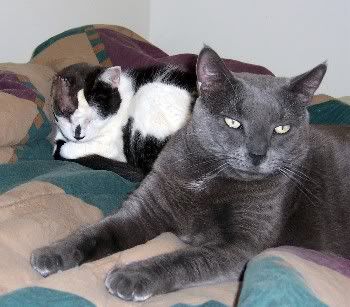
New Orleans is still recovering from Hurricane Katrina, or more accurately, the flooding caused by the breaches in the levees and floodwalls that were constructed by the Federal Government's U.S. Army Corps of Engineers. To learn why New Orleans flooded - and it was not due to a "natural disaster" but due to the "Worst Engineering Disaster in History" as cited by The American Society of Civil Engineers, check out Levees.org
I should know. My car broke down 2 days before Katrina - which was up until that Friday, still supposed to hit the panhandle of Florida. I had 8 cats and took care of dozens of feral cats in my neighborhood. I was broke and I refused to leave the cats behind.
The storm on Monday, August 29th, 2005, was pretty scary but afterwards, I was able to use my cell phone to call up friends to let them know that everything was ok. There were trees down and wind damage but really, not much rain at all. Then, the water started gradually coming up - and kept rising. Soon, I could hear dogs up and down the block barking and yelping until I didn't hear them anymore. My feral porch cat, Emerald, had ridden out the storm underneath the house, as did most of the feral cats in New Orleans - a city of raised homes. I heard her crying and I tried to get to her through the floor furnace - but when I got it opened , water gushed in........and I never heard or saw Emerald again.
The rest of the day and night are a blur to me now - my mind fractured off into the surreal - like watching a movie of someone else. I managed to climb up into a 7 foot high closet before passing out from shock, exhaustion and hyperthermia. But I woke several times during that long night and could hear my cats crying in terror.
The next morning, I woke and could hear what sounded like copters flying overhead. But all that I wanted to do was to lie there and never move again. One of the cats started crying pitifully from the front room and I opened my eyes to see her clinging to the curtains. This got me moving and out of the closet and down into the water that came up to my neck.

During the next hour, I was able to break out my back windows and swim 3 of the cats out to the carport roof - I could only find 2 carriers as they had sunk down somewhere on the floor in the murky water. The 5 others were placed up into the same closet that had given me refuge and another feral cat swam outside to cling onto the limbs of a tree.
I was rescued by a first responder in an airboat and taken to the railroad tracks nearby. Soon, the Missouri Coast Guard picked me and the 3 cats up and took us out to the Interstate. Eventually, a school bus took us, and other rescued folks and their pets to a shelter in Thibodaux, La. - about 40 miles west of New Orleans. I spent several days there in pretty primative conditions - no electricity, no phones, no email.
Family members were finally contacted and they came to get me 5 days later. It took another 2 days to get to where my Mom had evacuated to - in Birmingham, Alabama, where we had relatives. But throughout this ordeal, I was obsessed about the poor cats that I left up in that closet and I contacted every rescue group listed to try and get someone, anyone to go save them.
Finally, after getting no responses, I decided to go back to New Orleans to get them myself. Everyone told me that it would be impossible - the city was under lock down and no one was being allowed back in. Huh. Through an internet chat room, I met a man named Steve Vicknair who was in Houston, Texas. He had a boat and he wanted to help people like me rescue their pets.
And that is what we did. On September 11th, 2005 - two weeks! after Katrina, we got back to my still flooded apartment to find all cats still alive!!!! They had no food or water for all of that time - but they survived!!!!!
I stayed in Birmingham with my Mom (and the 8 cats) for 6 months until her health declined and she moved into an Assisted Living facility. Her house (and my inheritance) had taken in 11 feet of water and was very underinsured. She did have flood insurance as did most of the families in New Orleans - but the very minimum. We fought with Traveler's home owner's insurance for almost 2 years before they paid my Mom what she was owed. But the house could not be repaired.
I moved back to New Orleans in March of 2006 into an apartment in the Mid-City area - an area that had not gotten too much flooding compared to the 80% of the rest of the city. I got back involved with animal rescue, cats in particular...it was still a hairy time, with packs of dogs running wild in the streets and many, many starving animals. Things have somewhat improved but the animals of New Orleans still need so much help.
ARNO - Animal Rescue New Orleans - is still here. It is an all volunteer group that was formed shortly after Katrina - and has probably done the most out of all of the rescue groups:

The Katrina pictures that I managed to take when the water came up......and months later:
The Cat Rescue pics:
My health gradually deteriorated in those first years back - my health care had been provided at Charity Hospital for about 3 years before Katrina, but it had to close - and is still closed. However their clinics still remained open - an emergency one had been set up at the Lord & Taylor department store near the devastated Superdome - that was so strange to go there for medical treatment, when a year earlier I had shopped for shoes.....
I developed shingles, and a strong chemical sensitivity - possibly due to the stress and perhaps being in the water during and after Katrina. I was in constant pain from fibromyalgia and my IBD often prevented me from leaving the house.
Thankfully, I was able to get Social Security disability - 3 years in the making - it only provides $693.00 a month but I do get Medicare, which enabled me to find Dr. Rai - the doctor who led me to Dr. Berkson - who changed my life.
I could never live anywhere else - New Orleans is and forever will be - the center of the universe!

Subscribe to:
Posts (Atom)